Revive Magazine Spread
Editorial Design • Layout • Typography • Art Direction
A calm, spacious editorial layout designed to slow the reader down
Tools
Procreate, Adobe InDesign

The Problem
Editorial layouts can prioritize density and visual stimulation, which can overwhelm the reader. This project explores how a more minimal, image-driven approach can create a sense of calm while still supporting a text-heavy article.
Audience
Readers interested in wellness, lifestyle, and slow living - individuals drawn to quiet, reflective content and clean, uncluttered design.
Process
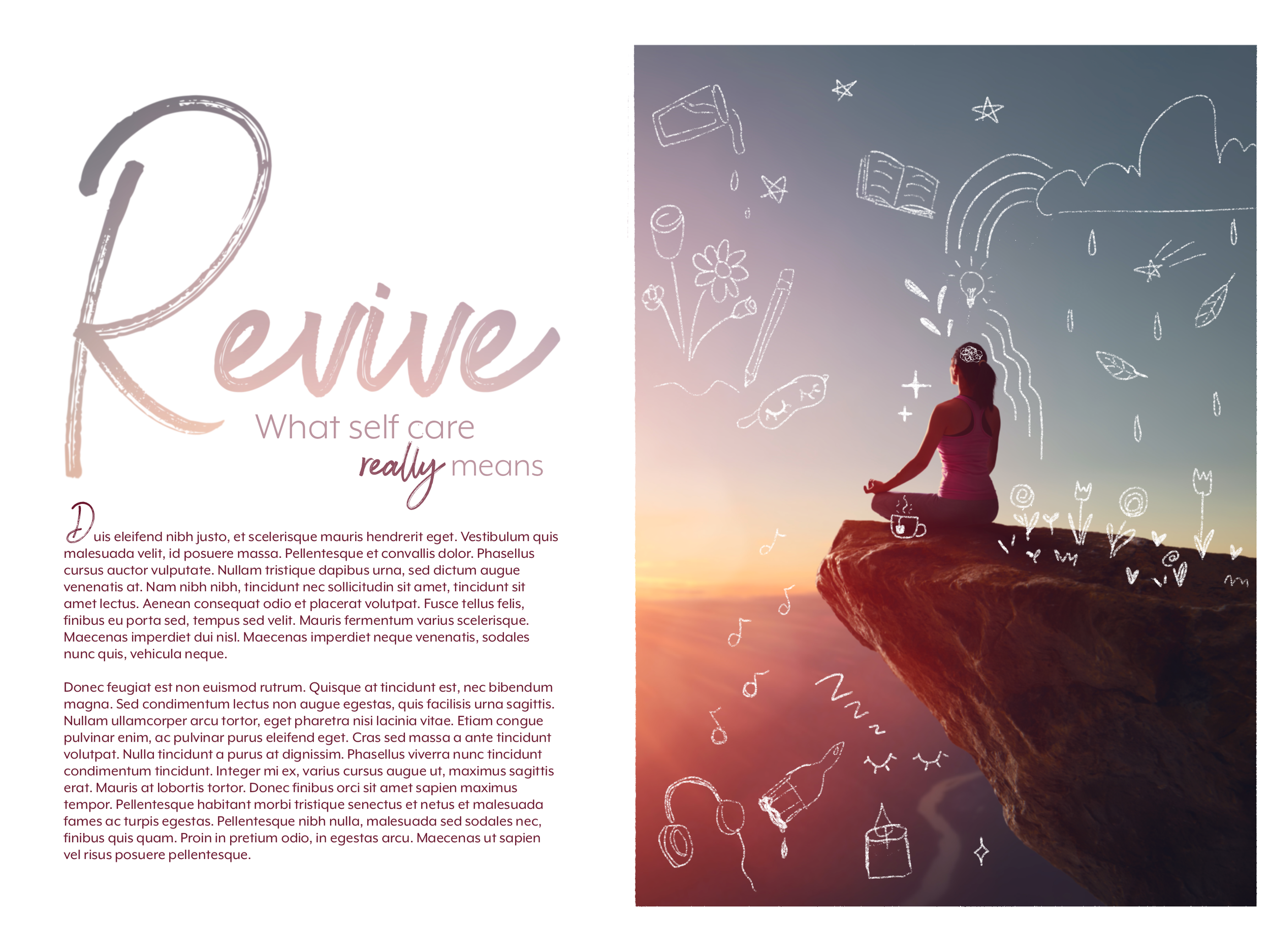
Initial layout concepts were sketched in Procreate, exploring different balances of image and text before refining the final composition in Adobe InDesign.

Overview
A two-page editorial spread created for a graphic design course at Fanshawe College. Based on the article title Revive, the goal was to design a layout that visually communicates calm, balance, and mental reset through both imagery and typography.
Creative Direction
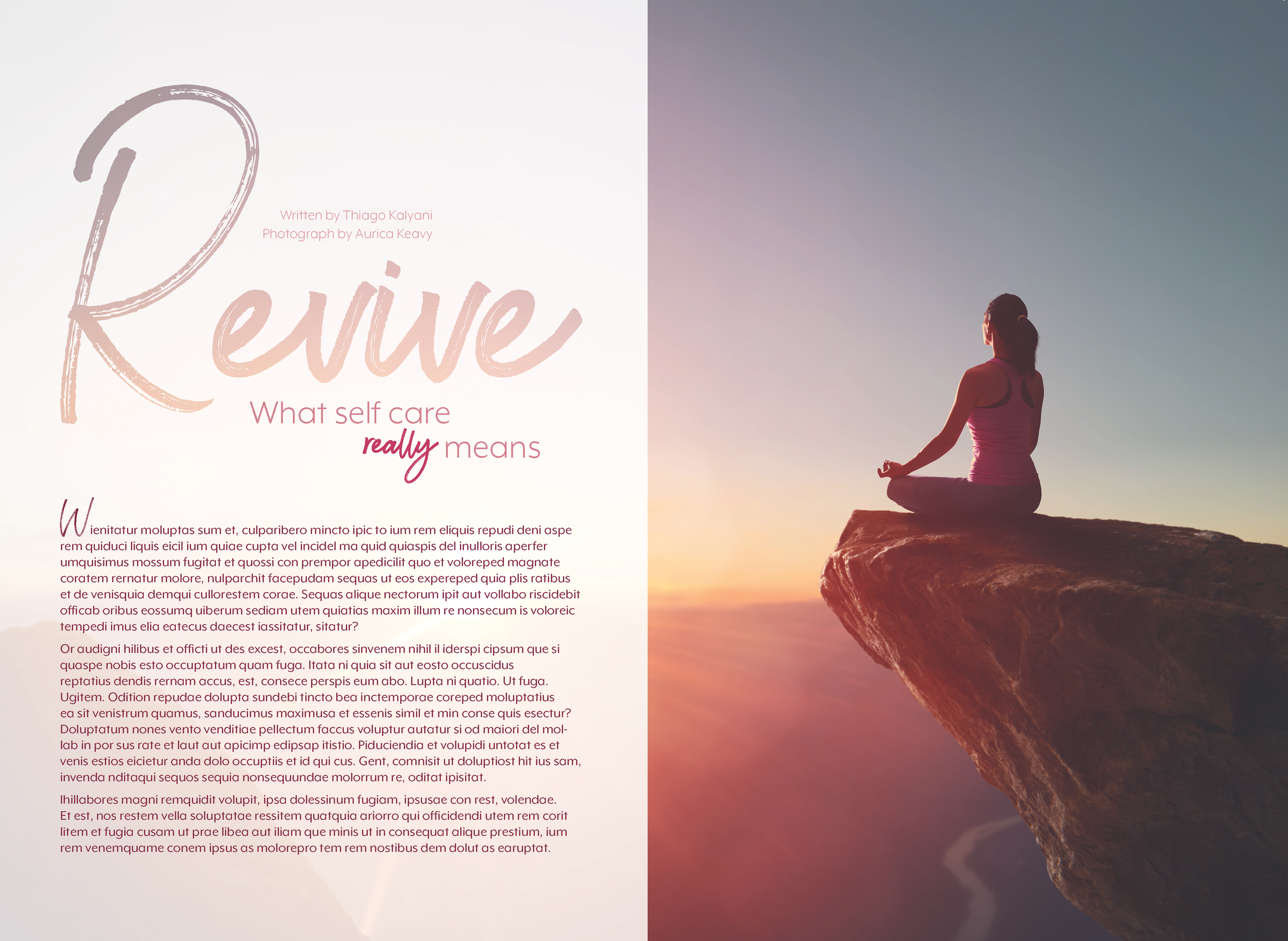
The design centers around a feeling of stillness and openness. A
large-scale image of a figure in a meditative pose at sunset establishes mood and atmosphere, while the layout uses negative space and restrained typography to create a sense of visual breathing room.
Image-Led Layout
One page is dedicated entirely to a full-bleed image, creating an immersive and calming visual entry point.
Typography & Hierarchy
The title REVIVE is set large and intentionally spaced, acting as a visual anchor. Body text is positioned low on the page to ground the composition and avoid competing with the imagery.
Solution
The design centers around a feeling of stillness and openness. A
large-scale image of a figure in a meditative pose at sunset establishes mood and atmosphere, while the layout uses negative space and restrained typography to create a sense of visual breathing room.
Reflection
This project focused on designing with intention and restraint. Rather than adding more visual elements, I explored how scale, spacing, and composition alone can shape the reader’s experience.