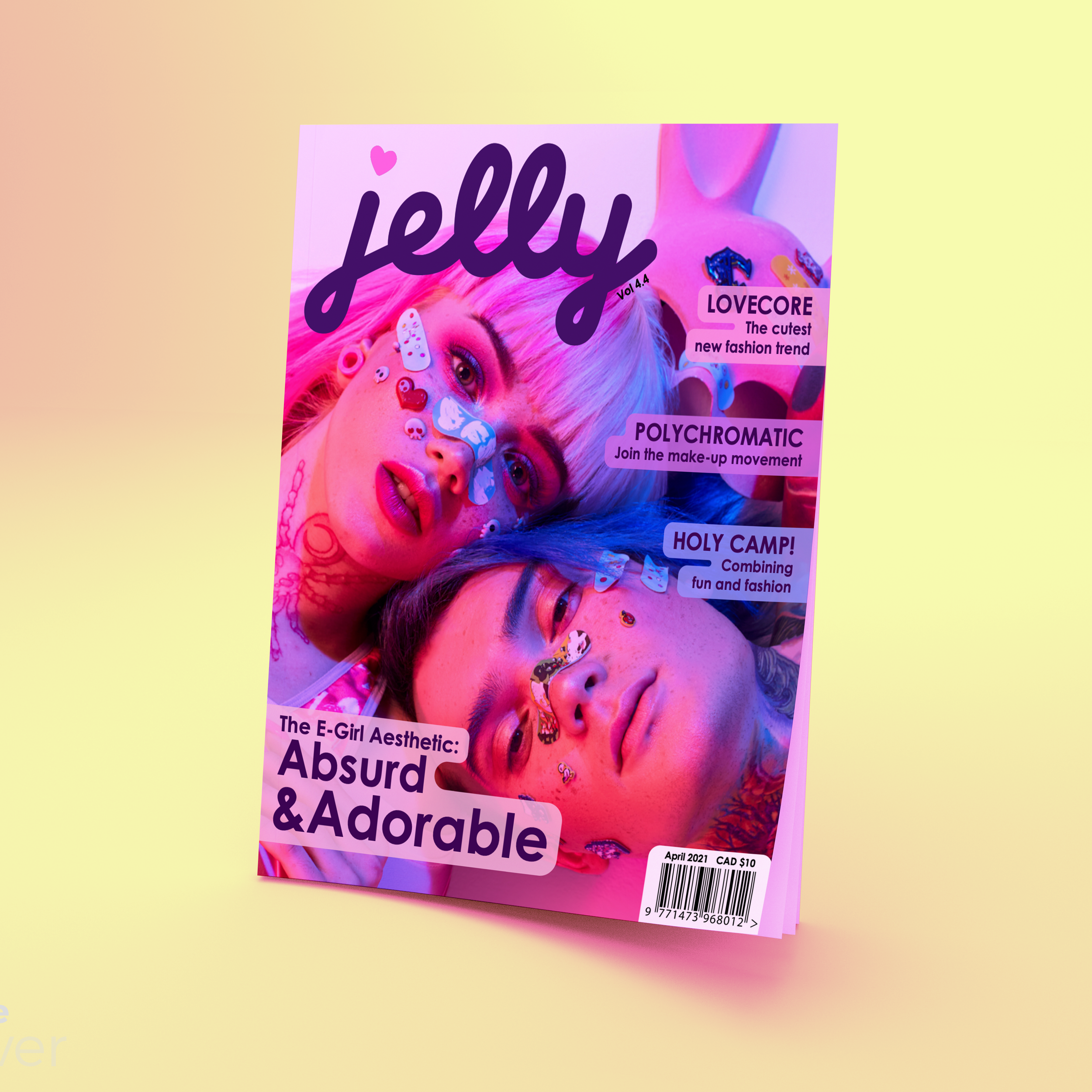
Jelly Magazine
Editorial Design • Layout • Typography • Art Direction
An energetic editorial concept inspired by early 2000s Japanese teen fashion magazines
Tools
Adobe Illustrator, Adobe InDesign
Overview
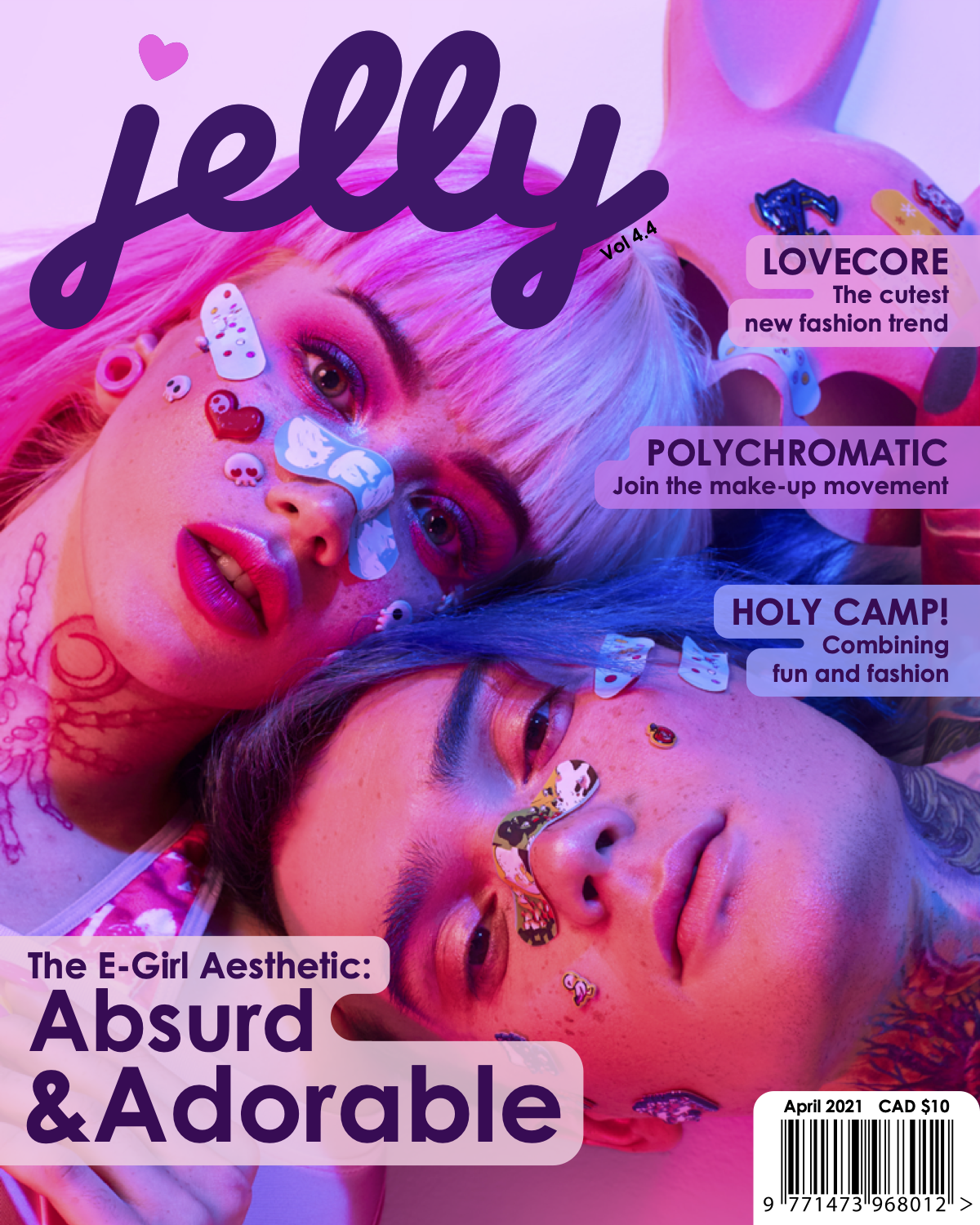
Jelly Magazine is a conceptual publication developed as part of a graphic design course at Sheridan College. The project involved creating a complete magazine identity, including the nameplate, cover design, and interior editorial spread.
Concept
A monthly magazine celebrating colourful, expressive fashion, art, and pop culture for a new generation of creatively driven young women. Inspired by early 2000s Japanese fashion magazines, the goal was to reimagine that bold, playful style for a North American teen audience.
The Problem
Many contemporary fashion publications lean toward minimalism, often losing the sense of personality and visual excitement that defined earlier teen magazines. This project explores how expressive, high-energy editorial design can be reintroduced in a way that still feels cohesive and intentional.
Nameplate
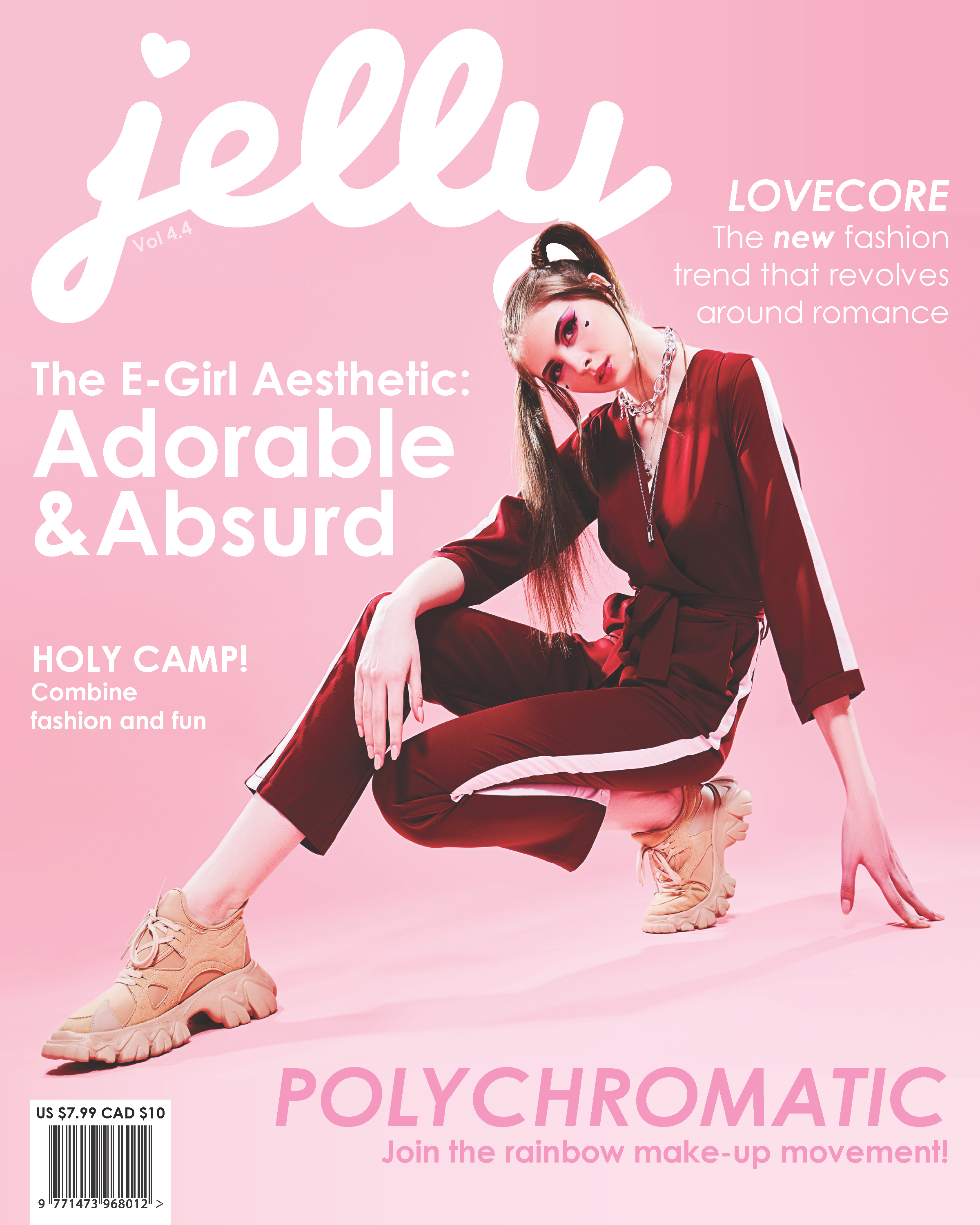
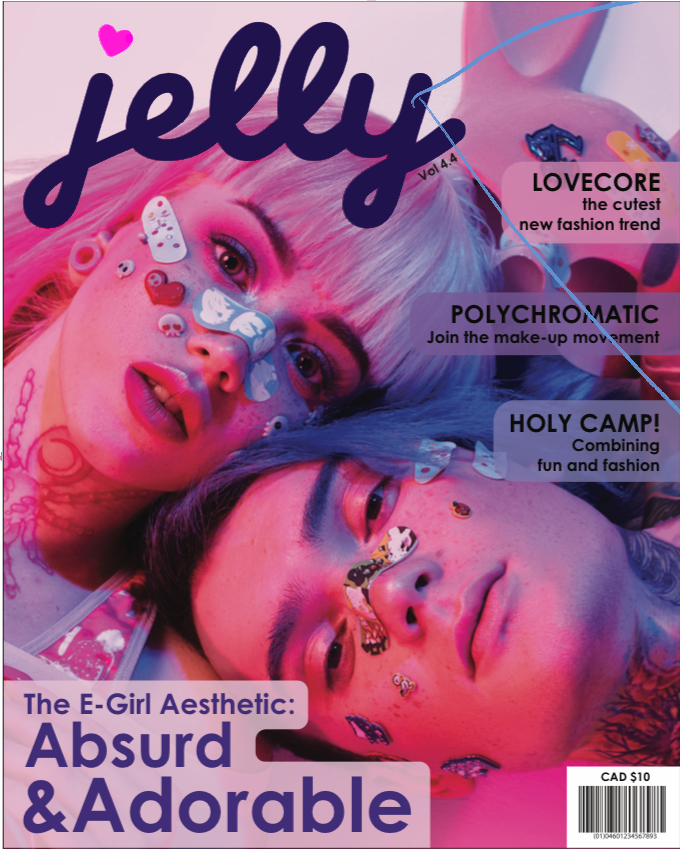
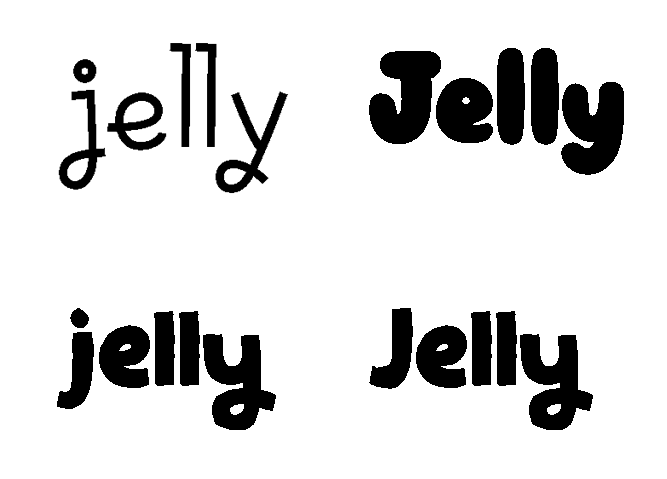
Designed to be eye-catching and flexible, allowing it to interact dynamically with cover imagery while remaining recognizable.
Creative Direction
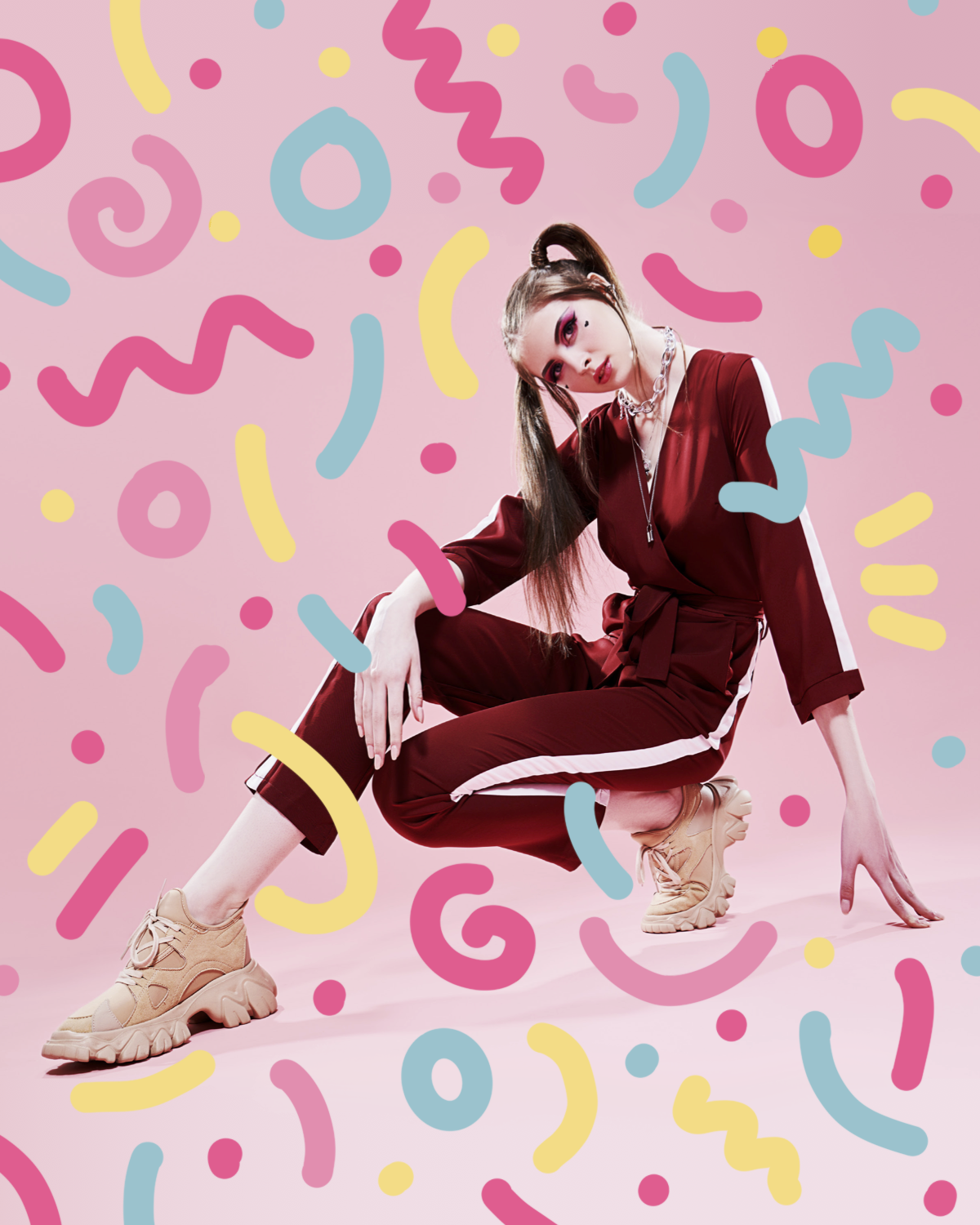
The visual identity embraces a bold approach, combining vibrant colour and playful typography. Drawing inspiration from Japanese magazine layouts, I focused on creating a sense of movement and density while maintaining readability through structured hierarchy.
Cover Design
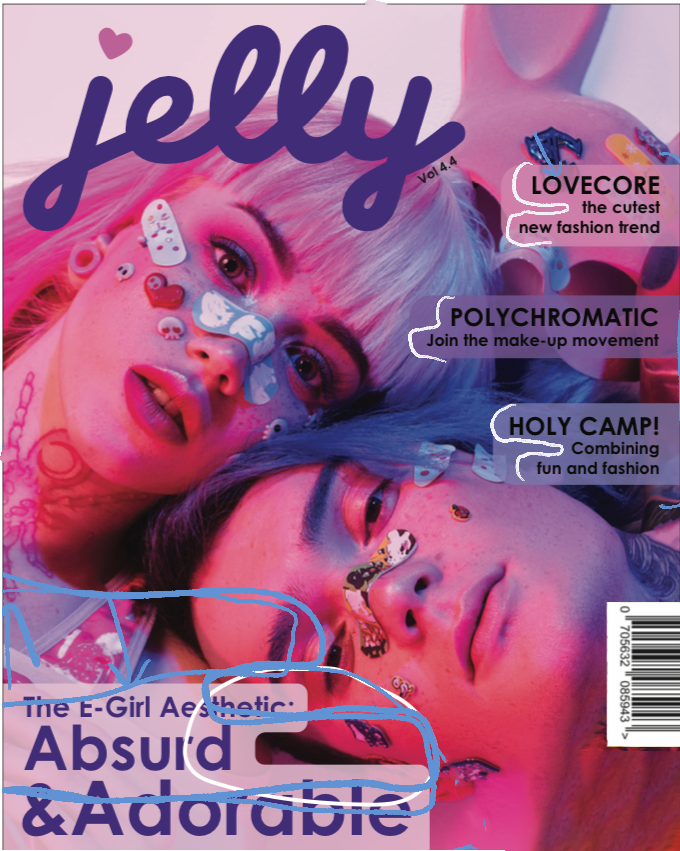
Built to feel energetic and visually packed, varied type treatments, and bright colours to capture attention and reflect the magazine’s tone.
Editorial Spread
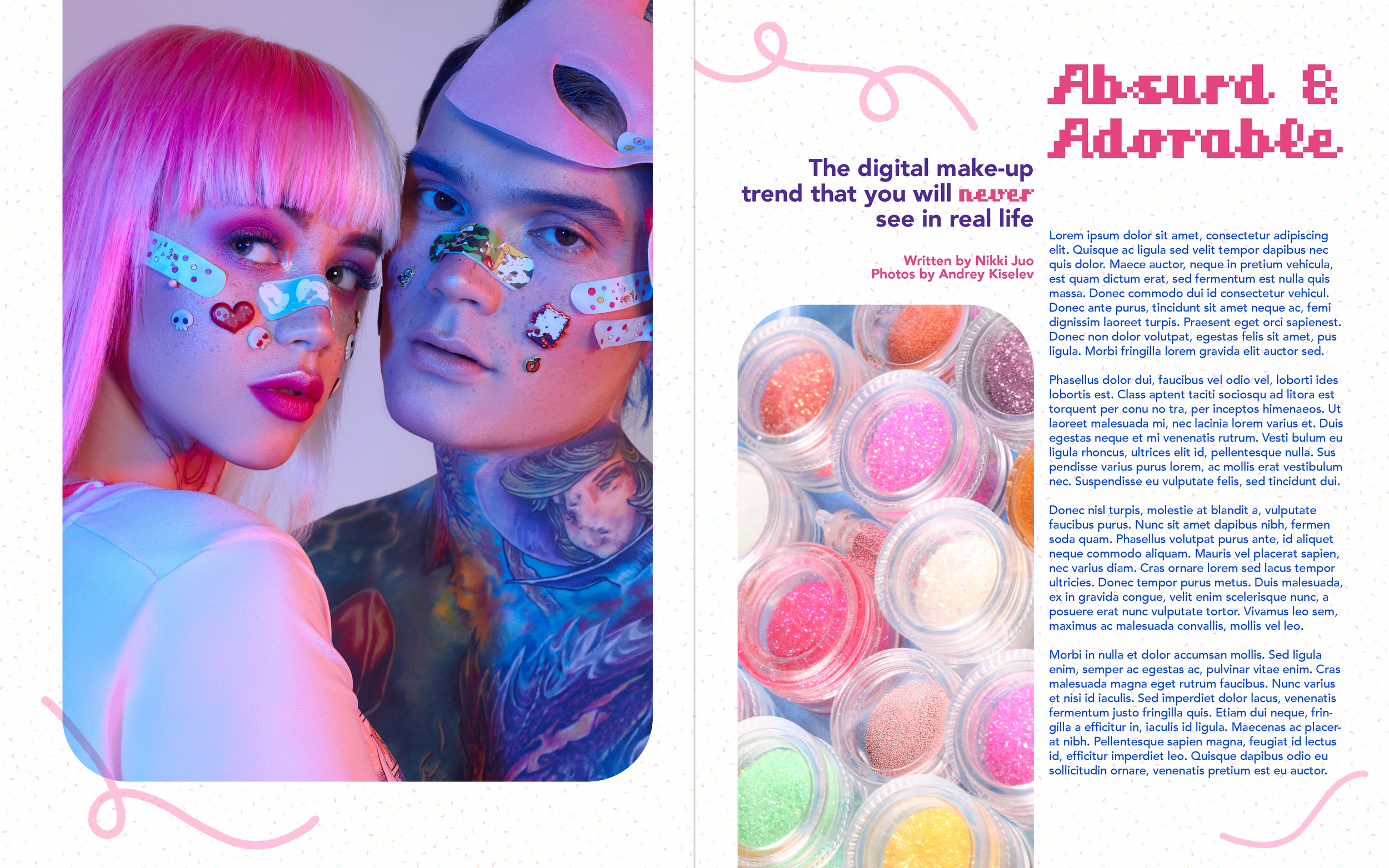
Balances expressive layouts with clear hierarchy, using grid systems to organize content while still allowing for playful visual moments.
Typography & Layout
Varied font scales to create hierarchy and rhythm
Grid-based structure underlying expressive compositions

Solution
Jelly Magazine reintroduces a more playful and expressive approach to editorial design, demonstrating how maximalist aesthetics can still function effectively through thoughtful layout and hierarchy.
Reflection
This project allowed me to explore editorial design beyond minimalism, focusing on how to balance high-energy visuals with clarity and usability. It strengthened my understanding of layout systems, typography, and designing for a specific audience.